What is Titanium Tungsten Carbide and Its Applications?
Titanium Tungsten Carbide is an innovative material gaining traction in various industries. This compound offers a unique blend of durability and resistance to wear, making it highly sought after. Its creation involves combining titanium with tungsten carbide, resulting in a composite that is stronger than conventional materials.
The applications of Titanium Tungsten Carbide are vast and diverse. It is commonly used in cutting tools, industrial machinery, and even jewelry. The wear-resistant nature of this compound enhances performance and longevity, reducing replacement costs. However, some industries still overlook its full potential.
Despite its advantages, challenges remain. Not every application benefits equally from Titanium Tungsten Carbide. Some environments may present compatibility issues. Exploring these nuances is essential for maximizing this material's benefits. By understanding its limitations, we can refine our approaches and unlock new possibilities in material science.
What is Titanium Tungsten Carbide?
Titanium tungsten carbide is a powerful composite material. It combines titanium with tungsten carbide to enhance durability. This combination results in high resistance to wear and corrosion. Industries increasingly adopted it for demanding applications.
The unique properties of titanium tungsten carbide make it ideal for manufacturing cutting tools and wear parts. It boasts exceptional hardness, making it suitable for intense machining processes. Additionally, it exhibits lightweight qualities, providing an advantage in energy efficiency.
Despite its strengths, titanium tungsten carbide does require careful handling during production. The high hardness can create challenges in the manufacturing process. Achieving the desired finish can be time-consuming. These factors necessitate skilled craftsmanship to optimize efficiency and product quality. As use in various sectors grows, developers must refine processes continuously.
The Composition and Properties of Titanium Tungsten Carbide
Titanium tungsten carbide (TiWC) is a composite material renowned for its exceptional hardness and wear resistance. This material blends titanium, tungsten, and carbon, resulting in a unique structure that exhibits remarkable toughness. According to recent studies, TiWC can achieve a hardness rating exceeding 90 HRA. This makes it suitable for various applications, particularly in heavy machinery and cutting tools. The high melting point, around 3000°C, further enhances its performance under extreme conditions.
In terms of composition, titanium represents about 30%, while tungsten makes up 50%, with carbon constituting the remaining 20%. This specific combination provides a balance between ductility and strength. The properties of TiWC allow it to withstand significant compressive forces. It is important to consider, however, the challenges in manufacturing this material. The processing methods can influence its final properties, leading to variations in performance. For instance, achieving a uniform distribution of the components can be challenging. The creation of defects during manufacturing can impact the overall effectiveness of TiWC.
Applications of TiWC span multiple sectors, from aerospace to medical devices. Its ability to resist wear makes it ideal for tools utilized in high-friction environments. Nevertheless, the cost of raw materials and the complexity of production methods are limitations. Developing cost-effective techniques for TiWC production remains an area for further enhancement. Thus, while titanium tungsten carbide shows immense potential, optimizing its production remains a key focus for the industry.
Manufacturing Processes of Titanium Tungsten Carbide
Titanium tungsten carbide (TiWC) stands out in the realm of advanced materials. Its unique blend of titanium and tungsten carbide gives it exceptional hardness and durability. These properties make it ideal for various industrial applications. The manufacturing processes of TiWC play a crucial role in achieving its remarkable characteristics.
To create TiWC, powder metallurgy is often employed. This involves mixing titanium and tungsten carbide powders, followed by pressing and sintering. The sintering process heats the compacted powder to below its melting point. This enhances the material’s density and mechanical properties. Each step in this process requires precision and control to optimize the final product’s performance.
Tip: Always pay attention to the grain size of the powders used. Smaller grain sizes often lead to better mechanical strength.
Another method involves chemical vapor deposition (CVD), which creates a thin film of TiWC. This technique allows for surface coatings on various substrates. It is essential for applications where wear resistance is critical. Controlling the deposition parameters is vital to ensure uniform coatings.
Tip: Conduct regular inspections of the coated materials. This helps identify any defects early in the use phase.
Despite its benefits, TiWC production can be costly and complex. Surfaces may require further finishing to reach desired tolerances. Continuous research aims to improve manufacturing techniques and reduce production costs. This can lead to broader adoption in diverse fields.
What is Titanium Tungsten Carbide and Its Applications? - Manufacturing Processes of Titanium Tungsten Carbide
| Property |
Value |
Application |
| Density |
15.9 g/cm³ |
Industrial cutting tools |
| Hardness |
> 2000 Hv |
Wear-resistant coatings |
| Melting Point |
2800 °C |
High-temperature applications |
| Young's Modulus |
450 GPa |
Structural components |
| Thermal Conductivity |
80 W/m·K |
Heat sinks |
| Corrosion Resistance |
Excellent |
Marine applications |
Key Applications of Titanium Tungsten Carbide in Industries
Titanium tungsten carbide is a composite material known for its impressive hardness and durability. This unique combination of titanium and tungsten carbide allows for superior wear resistance. Industries across the board leverage its exceptional properties.
In manufacturing, it is widely used for cutting tools due to its ability to maintain sharpness under pressure. These tools often last longer than traditional options. In healthcare, titanium tungsten carbide is found in surgical instruments. Their durability ensures reliability during critical procedures.
Mining companies also turn to this material for drill bits and other equipment. Its resistance to abrasion increases efficiency and reduces downtime.
Despite its advantages, challenges exist. The production process can be costly and complex. Additionally, not all manufacturers have the expertise to work with this sophisticated material effectively. Anticipating these hurdles is essential for companies looking to adopt titanium tungsten carbide in their operations. Understanding its potential and limitations will lead to better applications in future innovations.
Advantages and Limitations of Using Titanium Tungsten Carbide
Titanium tungsten carbide is a composite material known for its toughness. It combines titanium and tungsten carbide, resulting in a durable substance. This hybrid offers impressive hardness and wear resistance. It is often used in cutting tools, industrial machinery, and even jewelry. However, while its strength is notable, it also has its drawbacks.
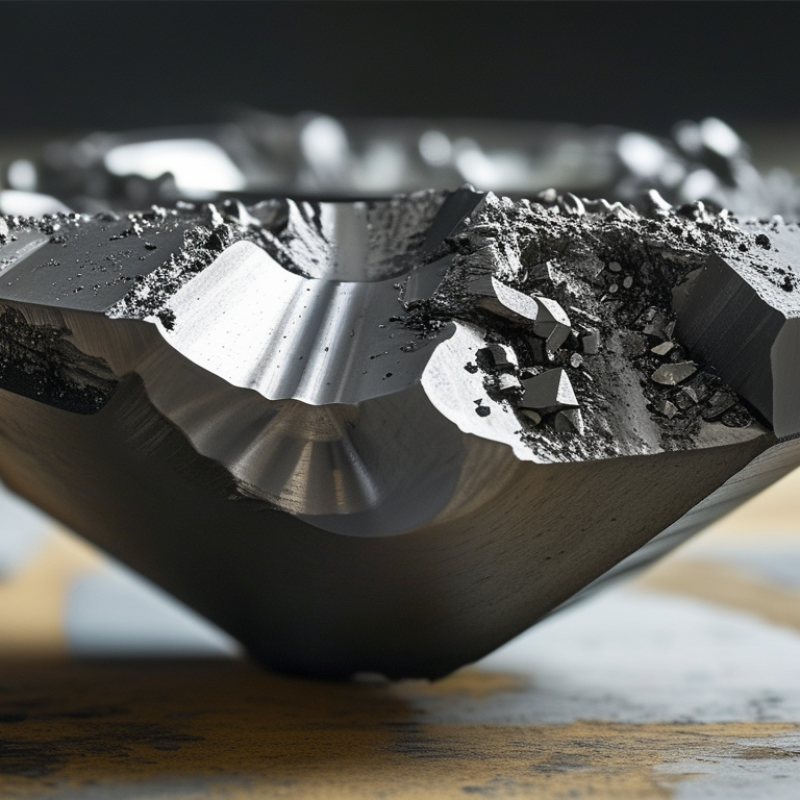
One challenge with titanium tungsten carbide is its brittleness. Under certain stress conditions, it can fracture. This limitation makes it less ideal for applications where flexibility is needed. Additionally, the production process can be complex. The materials require careful handling to maintain their properties. Despite this, many industries still choose titanium tungsten carbide for its superior performance in specific applications.
In practical terms, choosing titanium tungsten carbide depends on the task at hand. The decision should consider both its advantages and limitations. While it excels in specific environments, its brittleness could lead to failures if not aligned with proper usage. This contrast emphasizes the need for careful assessment, ensuring the benefits outweigh the potential for drawbacks.