Leave Your Message

Leave your message now to get your free sample and discount price

China Top 10 Tungsten Alloy Suppliers Which Is Best?

Choosing among China’s top tungsten alloy suppliers is not simply a matter of comparing prices. In practical sourcing, material consistency often matters more than an attractive quotation. A reliable supplier should provide clear alloy grades, density data, mechanical properties, dimensional tolerances, and inspection records. These details affect performance in counterweights, radiation shielding, industrial tooling, and precision components.

This guide examines ten leading Chinese suppliers through practical and professional criteria. We consider manufacturing experience, production capacity, quality control, customization ability, export support, and customer communication. Certifications can support credibility, but they do not replace independent testing. Sample evaluation remains essential. It can reveal surface defects, uneven density, machining difficulties, or delivery concerns before a larger purchase.

The best Tungsten Alloy supplier depends on your application, budget, required geometry, and expected service life. A company with advanced equipment may not be the strongest choice for small, customized orders. Another supplier may offer excellent engineering support but longer lead times. No ranking is perfect. Supplier information can also change.

Look beyond polished websites. Ask for recent test reports, material certificates, sample dimensions, and realistic production schedules. Confirm whether quoted properties apply to the exact grade and manufacturing process. This comparison aims to provide a balanced starting point, not a final purchasing decision. Careful verification still belongs to the buyer.
China Top 10 Tungsten Alloy Suppliers Which Is Best?

What Is Tungsten Alloy and Where Is It Used?

What Is Tungsten Alloy and Where Is It Used?

Tungsten alloy combines tungsten powder with nickel, iron, copper, or other binders. Its density commonly reaches 17.0–18.5 g/cm³, far above ordinary steel at about 7.8 g/cm³. This compact weight helps engineers create smaller counterweights, vibration dampers, and balancing components. Tungsten also has excellent heat resistance, although the alloy’s performance depends strongly on binder content and manufacturing quality.

The USGS Mineral Commodity Summaries 2024 estimated global tungsten mine production at about 78,000 metric tons in 2023. China accounted for roughly 80% of that output, showing why supply planning matters. Industry applications include medical radiation shielding, aerospace balancing, industrial tooling, and high-temperature components. In medical facilities, tungsten alloy can reduce the size of protective parts around imaging equipment. In rotating machinery, a small insert can correct imbalance without redesigning the entire assembly.

Tips: Match density, hardness, machinability, and corrosion resistance to the real working environment. Do not select an alloy by density alone. A material may look ideal on paper but fail after repeated thermal cycling. I have seen specifications overlook surface finishing and joining methods. That is an expensive lesson. Buyers should request composition data, dimensional tolerances, inspection records, and test results from qualified suppliers. USGS data supports market awareness, but it does not replace independent product verification.

China Top 10 Tungsten Alloy Suppliers Which Is Best? - What Is Tungsten Alloy and Where Is It Used?
Rank Anonymous Supplier Profile Typical Tungsten Content Main Alloy Systems Available Product Forms Key Technical Strength Typical Applications Best Fit For
1 Supplier Profile A
China-based powder-metallurgy producer
90–97 wt% W-Ni-Fe; W-Ni-Cu Rods, plates, blocks, rings, counterweights High density with controlled dimensional tolerances Balancing weights, aerospace parts, vibration-control components Large-volume industrial projects
2 Supplier Profile B
Custom-machining specialist
90–95 wt% W-Ni-Fe CNC-machined parts, sleeves, nozzles, inserts Complex geometries and secondary machining Medical shielding, industrial collimators, tooling Buyers requiring finished components
3 Supplier Profile C
High-density shielding material supplier
92–97 wt% W-Ni-Fe; W-Ni-Cu Sheets, plates, blocks, shielding inserts High mass attenuation and compact shielding design X-ray, gamma-ray, and nuclear shielding assemblies Radiation-protection equipment manufacturers
4 Supplier Profile D
Precision alloy bar producer
90–93 wt% W-Ni-Fe Bars, pins, cylinders, preforms Repeatable density and machinability Gyroscope components, inertial systems, precision weights Precision engineering and small-batch orders
5 Supplier Profile E
Tungsten alloy forging and forming supplier
90–95 wt% W-Ni-Fe Forged blanks, discs, plates, custom profiles Mechanical strength and structural integrity Aerospace, defense, transportation, industrial equipment Applications exposed to impact or vibration
6 Supplier Profile F
Small-part sintering specialist
90–92 wt% W-Ni-Fe; W-Ni-Cu Small precision parts, pellets, pins, inserts Near-net-shape production with reduced material waste Electronics, instruments, laboratory equipment Prototype and medium-volume production
7 Supplier Profile G
Copper-infiltrated tungsten alloy supplier
Typically 70–90 wt% W-Cu composites Contacts, electrodes, heat-sink parts High thermal conductivity and arc resistance Electrical contacts, resistance welding, power equipment Electrical and thermal-management applications
8 Supplier Profile H
Medical and laboratory component supplier
90–97 wt% W-Ni-Fe; W-Ni-Cu Collimators, shielding blocks, detector components Tight fit, surface finish, and shielding uniformity Diagnostic imaging and radiation-measurement systems Healthcare and research equipment builders
9 Supplier Profile I
Export-oriented stock material supplier
90–95 wt% W-Ni-Fe Standard plates, rods, blocks, blanks Common sizes and flexible export packaging General manufacturing, tooling, replacement parts Distributors and maintenance departments
10 Supplier Profile J
Research and prototype material supplier
85–95 wt% W-Ni-Fe; W-Ni-Cu; selected W-Cu grades Custom samples, test coupons, small components Material development and application support University laboratories, R&D, prototype testing Low-volume and experimental projects
What Is Tungsten Alloy?
Tungsten alloy is a high-density engineering material made by combining tungsten powder with binders or alloying metals such as nickel, iron, copper, or cobalt. Heavy tungsten alloys commonly contain approximately 90–97 wt% tungsten and can reach densities of about 17–18.5 g/cm³, depending on composition and processing.
Where Is Tungsten Alloy Used?
Common uses include radiation shielding, collimators, counterweights, vibration-control parts, aerospace components, defense equipment, medical imaging systems, industrial tooling, electrical contacts, and thermal-management components.
How to Select the Best Supplier: Compare tungsten content, density, alloy system, dimensional tolerance, surface finish, machining capability, inspection documentation, production capacity, packaging, and compliance with applicable specifications such as ASTM B777 where relevant. Supplier rankings should be validated against current quotations, samples, test reports, and project-specific requirements.

How to Evaluate China’s Tungsten Alloy Suppliers

Choosing from China’s top ten tungsten alloy suppliers requires more than trusting an online ranking. Evaluate material composition, density, hardness, and dimensional tolerance against your drawings. Ask whether the supplier can provide recent test reports, batch traceability, and clear quality records. A reliable manufacturer should explain its pressing, sintering, machining, and inspection processes in practical terms.

Request a small sample before placing a large order. Check its surface finish, weight, dimensions, and performance under real working conditions. Confirm production capacity, packaging methods, lead times, and communication during problem solving. Certifications can support credibility, but they do not replace direct evidence. A polished website may still hide weak process control. No supplier is perfect, and buyers can misjudge capability when relying only on low prices or impressive photographs.

Tips: Compare at least three quotations with identical specifications. Ask for tolerance data, material certificates, and an inspection plan. Use independent testing when the alloy supports safety-critical equipment. Clarify how defects are handled before payment. A short factory video is useful, but an audit or live technical meeting is stronger. Also, reconsider vague claims such as “premium quality” without measurable values. Good evaluation takes time. That is often the real cost of choosing well.

China’s Top 10 Tungsten Alloy Suppliers

China’s Top 10 Tungsten Alloy Suppliers serve industries such as aerospace, medical equipment, radiation shielding, and precision engineering. Their products commonly include tungsten-nickel-iron and tungsten-nickel-copper alloys. High-density materials can reach about 17–19 g/cm³, depending on composition and production methods. Experienced buyers should examine material certificates, dimensional tolerance, surface finish, and batch consistency.

A reliable supplier should explain its powder metallurgy process clearly. Ask about raw material traceability, sintering control, machining capacity, and inspection equipment. Independent testing can confirm density, hardness, chemical composition, and mechanical performance. Site audits also reveal practical details, such as clean storage areas and calibrated measuring tools. No ranking is perfect. A supplier suitable for counterweights may not fit complex shielding parts.

Tips Request a recent sample before placing a large order. Compare at least three quotations, but do not choose by price alone. Check whether the supplier can provide drawings, inspection reports, packaging details, and realistic delivery schedules. Confirm export documents and communication procedures early. Small gaps in tolerances can cause costly assembly problems. A thoughtful comparison of China’s top 10 tungsten alloy suppliers should match technical capability with your application, not just online visibility.

How the Top Suppliers Compare in Quality, Price, and Service

Choosing among the top ten tungsten alloy suppliers requires more than checking product photos. Quality starts with stable tungsten content, accurate dimensions, and consistent density. Ask for recent test reports, inspection records, and sample pieces before placing a large order. A reliable supplier should explain its testing method clearly, not hide behind technical language.

Price can be misleading. Lower quotes may exclude machining, packaging, testing, or shipping. Compare the full delivered cost instead. In practical sourcing work, small differences in density can affect shielding performance, balance, and service life. Service matters too. Check response times, drawing confirmation, production updates, and how problems are handled. Some suppliers answer quickly but provide weak technical support. That is worth noticing.

Tips: Request three comparable quotations with identical specifications. Confirm tolerances, surface finish, alloy grade, and delivery terms in writing. Review one sample under real working conditions if possible. Do not judge quality from price alone. I have found that a slightly higher quote sometimes reduces rework, although this is not always true. Supplier rankings also change by project, because the cheapest option may not suit urgent delivery or complex machining.

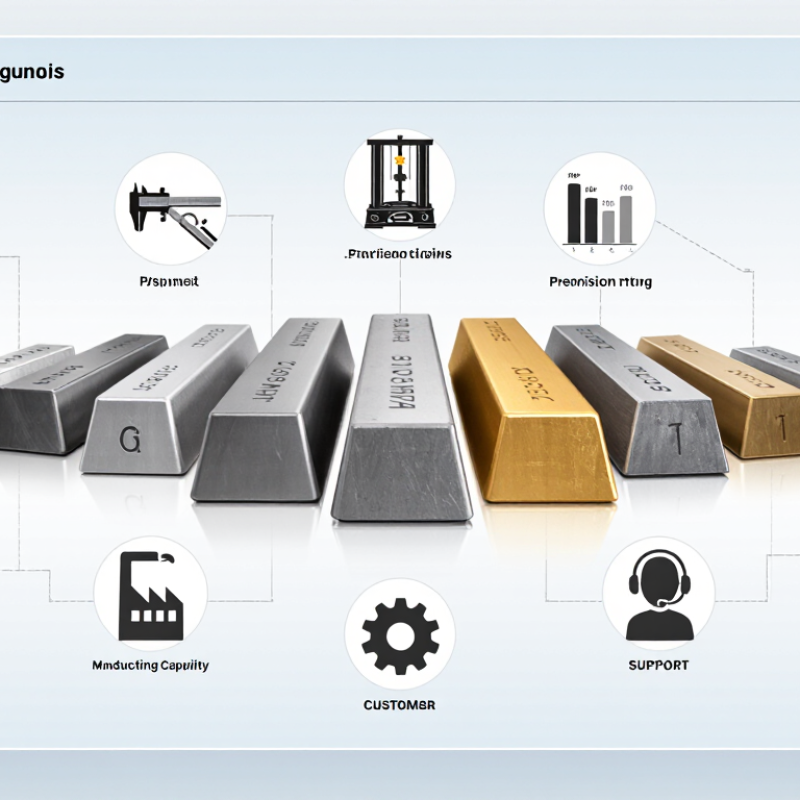
This anonymous comparison uses a normalized 0–100 benchmark. Quality reflects material consistency and manufacturing capability; price competitiveness reflects relative value; service reflects response speed, customization support, and delivery coordination. Higher scores indicate stronger overall performance.

Which Chinese Tungsten Alloy Supplier Is Best for Your Needs?

Choosing the best Chinese tungsten alloy supplier depends on your application, not a ranking alone. A counterweight may need high density and stable dimensions, while shielding parts require consistent thickness and surface quality. Tungsten-nickel-iron and tungsten-nickel-copper alloys offer different strength, machinability, and corrosion behavior. Define these requirements before comparing quotations.

A reliable supplier should provide material certificates, inspection records, and clear traceability from powder to finished part. Ask about density tolerance, hardness, dimensional accuracy, machining methods, and sample approval. Request a small trial batch. It can reveal problems that polished brochures hide. Confirm production capacity, packaging, delivery schedules, and technical communication in writing. In practice, the lowest price may create extra machining costs or delayed testing. I have found that response quality often predicts project reliability, although it is not a perfect measure. Verify claims with independent inspection when the order is critical.

Tips: Send a detailed drawing with tolerances, alloy requirements, and inspection points. Compare at least three suppliers using the same specification. Check whether the proposed alloy suits your operating temperature and environment. Keep records of samples, revisions, and test results. Small details matter.